
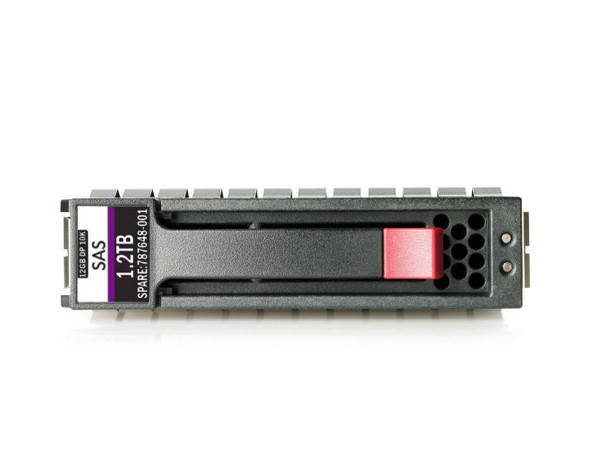
The Quiet Workhorse: How the HPE J9F48A Keeps Mission-Critical Systems Alive
HPE J9F48A 1.2TB 10000RPM 2.5-inch SFF Dual Port SAS-12Gbps Enterprise Hard Drive — A Complete Guide
Meta Description: Discover everything you need to know about the HPE J9F48A 1.2TB 10K SAS 12Gbps SFF Enterprise Hard Drive — specs, performance, compatibility, and why it remains a trusted storage solution for MSA 1040/2040 SAN arrays.
What Is the HPE J9F48A and Why Should You Care?
If you've ever been responsible for managing a mid-range SAN storage environment, you know that the hard drives sitting inside your array aren't just components — they're the heartbeat of your entire infrastructure. Every database query, every virtual machine snapshot, every backup job lives or dies by the performance and reliability of those drives.
The HPE J9F48A is a 1.2TB, 10,000 RPM, 2.5-inch Small Form Factor (SFF), Dual Port SAS 12Gbps Enterprise Hard Drive, purpose-built for HPE's Modular Smart Array (MSA) 1040 and 2040 SAN Storage Systems. It's the kind of drive that enterprise storage architects reach for when they need a balance of high performance, generous capacity, and rock-solid endurance — all in a compact footprint.
In this guide, we'll break down exactly what makes the J9F48A tick, who it's designed for, how it performs in real-world conditions, and why it continues to be a go-to choice for businesses running mission-critical workloads.
Key Technical Specifications at a Glance
Before diving into the deeper details, let's lay out the core specifications of the HPE J9F48A so you have a clear picture of what you're working with.
Drive Form Factor and Physical Dimensions
The J9F48A uses a 2.5-inch Small Form Factor (SFF) design. This compact size allows data centers to maximize drive density within a storage enclosure, fitting more drives into the same rack space compared to 3.5-inch Large Form Factor alternatives. For organizations operating at scale, this translates directly into more usable capacity per rack unit — a real cost and space advantage.
Interface and Transfer Protocol
The drive uses a SAS-12Gbps (Serial Attached SCSI) interface — the 12th-generation iteration of the SAS protocol. This dual-port interface delivers a theoretical peak transfer rate of 12 gigabits per second per port, which in practical terms means your storage fabric can push and pull data at high speed with minimal latency.
The dual-port design is especially important in enterprise environments: it enables multipath I/O (MPIO), allowing the drive to maintain connectivity through two separate pathways simultaneously. If one path experiences a fault or degradation, the other path takes over seamlessly — keeping your applications running without interruption.
Capacity and Rotational Speed
At 1.2 terabytes of formatted capacity and spinning at 10,000 RPM, the J9F48A sits in the sweet spot between the raw performance of 15K RPM drives and the higher capacity of 7.2K near-line SAS drives. The 10K speed provides fast seek times and high IOPS, making it well-suited for workloads that demand both responsiveness and substantial storage space.
Cache Buffer
The drive is equipped with a 64MB cache buffer, which acts as a high-speed staging area for frequently accessed or recently written data. A larger cache helps smooth out I/O spikes, reducing latency during bursts of activity that are common in transactional and mixed workloads.
Understanding the Target Platform: MSA 1040 and MSA 2040
The HPE J9F48A isn't a universal drive — it's specifically validated and qualified for use in the HPE Modular Smart Array (MSA) 1040 and MSA 2040 SAN storage arrays. Understanding these platforms helps explain why this drive was engineered the way it was.
What Is the HPE MSA Series?
The MSA family is HPE's line of entry-to-midrange shared storage arrays, designed to deliver affordable, high-availability SAN and NAS storage for small to medium-sized businesses and branch office deployments. These arrays are popular because they offer enterprise-grade features — like redundant controllers, thin provisioning, and tiered storage — without the complexity or cost of higher-end platforms.
MSA 1040 — Dual-Controller Entry SAN
The MSA 1040 is a dual-controller array offering both SAS and iSCSI host connectivity. It supports up to 10 Gbps iSCSI or 16 Gbps Fibre Channel, making it flexible enough to connect to a variety of host environments. The 1040 is built for smaller organizations that need reliable shared storage but don't require the throughput of enterprise-class arrays.
The J9F48A drives slot natively into the 1040's SFF drive bays, where the array's controller automatically recognizes and configures them without requiring manual intervention.
MSA 2040 — Higher Performance Midrange SAN
The MSA 2040 steps up the game with support for up to 16 Gbps Fibre Channel and 10 Gbps iSCSI, along with improved controller performance and greater scalability. Organizations running virtualization, databases, or business-critical applications often prefer the 2040 for its ability to handle heavier, more sustained I/O workloads.
When paired with J9F48A drives, the MSA 2040 delivers a compelling storage solution that balances cost, performance, and reliability in a manageable package.
Performance Deep Dive — What 10K SAS Really Means for Your Workloads
Numbers on a spec sheet only tell part of the story. Let's talk about what 10,000 RPM and SAS-12Gbps actually mean when your applications are hitting the storage layer.
IOPS and Latency Characteristics
A 10K RPM SAS drive like the J9F48A typically delivers in the range of 150 to 200 IOPS for random 4K reads under typical workloads — significantly higher than near-line 7.2K SAS drives, which generally cap around 80 to 100 IOPS. This makes the J9F48A a solid performer for:
- OLTP databases (Oracle, SQL Server, PostgreSQL) where transactional reads and writes are small and frequent
- Virtual machine storage where multiple VMs are simultaneously issuing I/O requests
- Email and collaboration platforms like Microsoft Exchange, which generate mixed I/O patterns
- ERP systems that require consistent, low-latency access to structured data
Sequential Throughput
For sequential workloads — large file transfers, backup streams, or log writes — the J9F48A's SAS-12Gbps interface ensures the drive is never the bottleneck at the interface level. The sustained transfer rate for sequential reads typically lands in the 180 to 220 MB/s range, depending on data location on the platter and system configuration.
The Advantage of Dual-Port SAS in a SAN Environment
One thing that distinguishes enterprise SAS drives from consumer or desktop-grade alternatives is the dual-port design. In an MSA 1040 or 2040 array, both controllers can access the same drive through different ports. This is what enables the array's Active-Active or Active-Passive controller configurations to function properly — and it's the foundation of high availability storage.
Without dual-port SAS, a controller failure would mean losing access to the drives attached to it. With dual-port drives like the J9F48A, a controller failover is transparent: your host continues reading and writing without noticing anything changed.
Reliability and Enterprise-Grade Endurance
Enterprise hard drives live a different life than consumer drives. They run 24 hours a day, 7 days a week, often under sustained I/O load, in densely packed enclosures where vibration and heat are constant challenges.
MTBF and Workload Rating
The J9F48A carries an enterprise-class Mean Time Between Failures (MTBF) rating designed for continuous operation in demanding environments. Enterprise SAS drives in this class are typically rated for 1.2 to 2.0 million hours MTBF, far exceeding the ratings of desktop or NAS-class drives.
More importantly, the drive is engineered for a high annual workload rating — typically 550TB or more per year — meaning it can sustain heavy read/write activity without premature wear, unlike consumer SSDs or nearline drives that may degrade under constant heavy I/O.
Vibration Compensation
Data centers are noisy environments — not just acoustically, but vibrationally. When dozens of drives spin simultaneously in the same enclosure, they generate rotational vibration that can degrade seek performance and reliability. The J9F48A includes rotational vibration (RV) sensors and compensation circuitry to detect and counteract this vibration, maintaining consistent performance in multi-drive configurations.
HPE SmartDrive Carrier Technology
The J9F48A is designed to work with HPE's SmartDrive carrier system, which provides hot-plug capability, secure drive locking, and LED status indicators for easy identification and replacement. This carrier-based design means that if a drive fails, a technician can pull and replace it in seconds — without powering down the array or disrupting active workloads.
HPE Branding and Firmware — Why It Matters
You might occasionally see physically similar drives sold as generic or third-party alternatives. While they may share the same underlying hardware, there's a meaningful reason to choose the HPE-branded J9F48A specifically.
HPE Firmware Tuning
HPE works closely with drive manufacturers to customize firmware specifically for the MSA platform. This includes tuning error recovery timers, queue depths, and power management behaviors to work correctly with the MSA controllers. Generic drives with standard firmware may behave unexpectedly — particularly during error recovery events — and can trigger unnecessary RAID rebuild cycles or false failures.
Compatibility Validation
HPE maintains a Storage Compatibility Matrix that lists every drive validated for use in each MSA model. The J9F48A is fully listed and tested for the MSA 1040 and 2040. Using validated drives ensures you're covered under HPE's support terms and that system firmware updates won't create compatibility issues down the road.
Warranty and Support Integration
HPE's support infrastructure recognizes the J9F48A by serial number and part number. This means when you open a support case, HPE can pull detailed drive telemetry and proactively identify potential issues before they become failures — a capability that simply isn't available with third-party alternatives.
Ideal Use Cases for the HPE J9F48A
Not every workload demands the same type of storage, and the J9F48A occupies a clear niche. Here's where it truly shines.
Virtualized Infrastructure
VMware vSphere and Microsoft Hyper-V environments generate complex, mixed I/O patterns from dozens or hundreds of virtual machines running simultaneously. The 10K RPM speed and high IOPS capability of the J9F48A make it well-suited for hosting VM datastores, particularly in organizations that haven't yet moved entirely to all-flash storage but need better performance than nearline drives can offer.
Business-Critical Databases
SQL Server, Oracle, and other relational databases depend heavily on fast random I/O for index lookups, transaction logs, and tempdb operations. A RAID array built from J9F48A drives provides the consistent low-latency response these applications demand.
Tiered Storage Configurations
In an MSA 2040 with tiered storage enabled, J9F48A drives can serve as the performance tier, handling your hottest, most frequently accessed data — while higher-capacity 7.2K SAS or nearline drives form a lower-cost capacity tier for colder data. This hybrid approach lets organizations optimize both performance and cost per gigabyte across their storage environment.
Backup and Secondary Storage
While SSDs dominate performance-primary applications, spinning drives remain cost-effective for secondary storage, backup targets, and archival workloads. The J9F48A's 1.2TB capacity and enterprise reliability make it a sensible choice for backup repositories within an MSA environment.
Comparing the J9F48A to Alternative Storage Options
It's worth understanding how the J9F48A sits within the broader landscape of enterprise storage options.
J9F48A vs. 15K RPM SAS Drives
Fifteen-thousand RPM SAS drives offer faster seek times and higher IOPS — but at a significantly higher cost per drive and with more heat and power consumption. For most mixed workloads, the performance difference between 10K and 15K drives is noticeable but not transformative. Unless your workload is extremely latency-sensitive, the J9F48A offers a better price-to-performance ratio.
J9F48A vs. Nearline 7.2K SAS Drives
Nearline SAS drives offer more capacity at lower cost — often 4TB, 6TB, or more per drive — but at roughly half the IOPS of the J9F48A. If your workload is primarily sequential (large file access, video storage, backup), nearline drives make sense. For anything transactional or mixed, the J9F48A's 10K speed is worth the premium.
J9F48A vs. Enterprise SSDs
Solid-state drives deliver dramatically higher IOPS and lower latency than any spinning drive. However, for organizations where cost per gigabyte matters and workloads are moderate rather than extreme, the J9F48A remains relevant — particularly when the MSA array is being used for secondary tiers, backup, or cost-sensitive primary workloads. SSDs also carry a higher price, making HDD-based configurations more economical at scale.
Installation and Deployment Considerations
Getting the J9F48A into service is straightforward, but a few practical considerations are worth keeping in mind.
Hot-Plug Capability
The J9F48A supports hot-plug insertion and removal in both the MSA 1040 and 2040. This means you can add drives to expand capacity or replace a failed drive while the array remains online and serving hosts — a critical feature for high-availability environments.
RAID Configuration
Within the MSA, J9F48A drives are typically configured into RAID groups (RAID 5, RAID 6, or RAID 10) using the array's management interface. RAID 5 offers a good balance of usable capacity and protection with a single drive fault tolerance, while RAID 6 provides two-drive fault tolerance at the cost of some usable space. For mission-critical applications, RAID 10 (mirrored stripes) offers the best performance and fastest rebuild times.
Spare Drives
Best practice in any enterprise storage deployment is to designate at least one drive per enclosure as a global hot spare. When a J9F48A drive fails, the array automatically begins rebuilding the RAID group onto the hot spare — minimizing the window of degraded protection. With 1.2TB drives, rebuild times are manageable, typically completing within a few hours depending on utilization.
Drive Firmware Updates
HPE periodically releases firmware updates for the J9F48A and other validated drives. These updates are delivered through HPE's SPP (Service Pack for ProLiant) or via the MSA's management interface. Keeping drive firmware current ensures you benefit from the latest reliability improvements and compatibility fixes.
Final Thoughts — Is the HPE J9F48A Still Worth It?
In an era where all-flash arrays are increasingly affordable and NVMe is becoming mainstream, it's fair to ask whether a 10K RPM SAS hard drive still has a place in modern infrastructure.
The honest answer is: yes, for the right workloads and the right budget.
Not every organization can justify the cost of an all-flash MSA. Not every workload demands sub-millisecond latency. For the many businesses running an MSA 1040 or 2040 as their primary or secondary SAN, the J9F48A offers a compelling combination of performance, capacity, reliability, and platform compatibility at a price point that makes storage expansion financially practical.
It's a drive that has earned its reputation in the field — quietly spinning away in server rooms and data centers around the world, handling the workloads that keep businesses running. And for as long as the MSA 1040 and 2040 remain in active deployments, the J9F48A will remain a relevant and trusted component in the enterprise storage ecosystem.
Quick Reference — HPE J9F48A Specifications Summary
| Specification | Detail |
|---|---|
| Part Number | J9F48A |
| Capacity | 1.2 TB |
| Form Factor | 2.5-inch SFF |
| Interface | SAS 12Gbps Dual Port |
| Rotational Speed | 10,000 RPM |
| Cache Buffer | 64 MB |
| Compatible Arrays | MSA 1040, MSA 2040 |
| Hot-Plug Support | Yes |
| Vibration Compensation | Yes (RV Sensors) |
| Workload Rating | Enterprise (High Duty Cycle) |
This article is intended for IT professionals, storage administrators, and procurement specialists evaluating hard drive options for HPE MSA SAN environments.
Recent Posts
-
HPE AG425B 300GB 15K Fibre Channel Hard Drive: High-Speed Storage for Enterprise-Class EVA Systems
Introduction: Reliable Storage for Demanding Enterprise Environments In enterprise IT, storage perfo …Oct 19th 2026 -
HPE AG425A 300GB 15000RPM Fibre Channel Hard Drive: Enterprise Storage Built for Demanding Environments
Enterprise storage systems depend on dependable hardware that can deliver consistent performance whi …Oct 18th 2026 -
Where Legacy Power Meets Enterprise Precision: The HPE 431944-B21 300GB SAS Hard Drive
HPE 431944-B21: Enterprise Storage Built for the Demanding ProLiant Era The HPE 431944-B21 is a 300G …Oct 17th 2026