
Built to Disappear: The HPE 718160-B21 and the Highest Compliment in Enterprise Storage
HPE 718160-B21 1.2TB 10K RPM SAS Hard Drive: Everything You Need to Know Before You Buy
If you're running HPE ProLiant servers from Gen1 through Gen7, storage decisions aren't something you make lightly. The wrong drive can bottleneck your entire infrastructure — too slow, too small, or simply incompatible. The right one, though? It just works, day after day, without you ever having to think about it.
That's exactly what the HPE 718160-B21 is designed to be — the drive you install and forget, because it never gives you a reason to worry.
This article walks you through everything about this enterprise-grade hard drive: what it is, how it performs, who it's built for, and whether it deserves a slot in your server rack.
What Is the HPE 718160-B21?
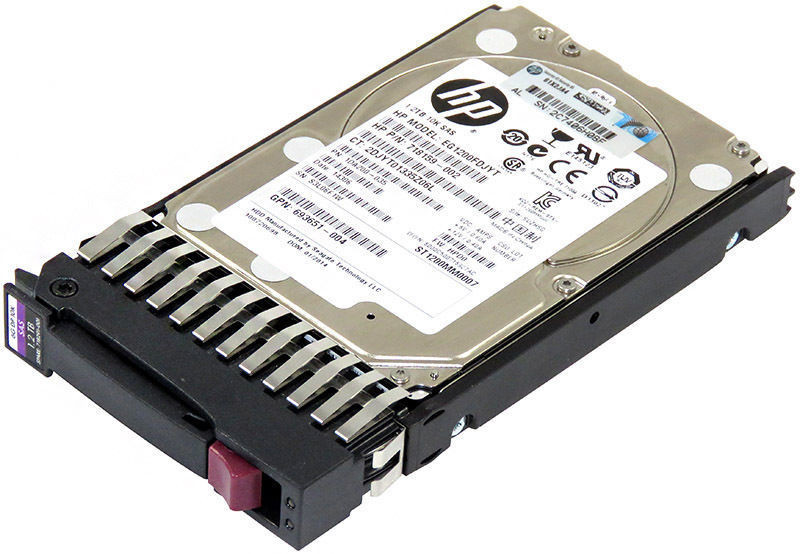
The HPE 718160-B21 is a 1.2TB, 10,000 RPM, 2.5-inch Small Form Factor (SFF) SAS hard drive engineered specifically for HPE ProLiant Gen1 through Gen7 servers. It connects via a Dual Port SAS-6Gbps interface, making it compatible with a wide range of HPE server generations — a significant advantage for organizations running legacy infrastructure alongside newer systems.
Think of it as the workhorse of enterprise storage: not flashy, not headline-grabbing, but quietly exceptional at what it does.
Key Specifications at a Glance
| Specification | Detail |
|---|---|
| Part Number | 718160-B21 |
| Capacity | 1.2TB (1,200GB) |
| Spindle Speed | 10,000 RPM |
| Form Factor | 2.5-inch Small Form Factor (SFF) |
| Interface | Dual Port SAS-6Gbps |
| Compatible Servers | HPE ProLiant Gen1 – Gen7 |
| Drive Type | Enterprise Hard Drive |
| Manufacturer | Hewlett Packard Enterprise (HPE) |
Why 10,000 RPM Still Matters in Enterprise Storage
In a world increasingly moving toward SSDs, you might wonder why a 10K RPM spinning drive is still relevant — and it's a fair question. The honest answer is: it depends on your workload.
The Sweet Spot Between Cost and Performance
SSDs are fast. Everyone knows that. But they come at a cost premium that isn't always justified, especially when you're scaling storage across dozens of servers or when your workload isn't purely latency-sensitive.
The 10,000 RPM SAS drive hits a sweet spot that many enterprise environments still rely on:
- Higher throughput than 7,200 RPM SATA drives — you get noticeably faster sequential and random I/O
- Lower cost-per-gigabyte than SSDs — critical when you need multiple terabytes across many nodes
- Proven reliability in 24/7 environments — enterprise SAS drives are engineered for continuous operation in a way consumer drives simply aren't
For database servers, file servers, virtualization hosts, and backup targets running on Gen1–Gen7 ProLiant hardware, the HPE 718160-B21 delivers exactly the kind of sustained, reliable performance these workloads demand.
How 10K RPM Translates to Real-World Performance
Spindle speed directly affects rotational latency — the time it takes for the drive to position the correct sector under the read/write head. At 10,000 RPM, average rotational latency drops to around 3ms, compared to roughly 4.16ms on a 7,200 RPM drive. That might sound small, but across thousands of I/O operations per hour in a busy production environment, it adds up to meaningful, measurable gains.
The Case for SAS: Why Not SATA?
When comparing storage options, IT managers often face the SAS vs. SATA debate. The HPE 718160-B21 lands firmly on the SAS side — and for good reason.
SAS vs. SATA: Understanding the Difference
SATA (Serial ATA) drives were designed with consumer and light workload use in mind. They're affordable and widely available, but they're built for intermittent, moderate use — not the relentless demands of a production server running 24 hours a day, 365 days a year.
SAS (Serial Attached SCSI), on the other hand, was designed from the ground up for enterprise environments. The HPE 718160-B21 benefits from everything the SAS protocol brings to the table:
- Full-duplex communication — SAS can read and write simultaneously, unlike SATA's half-duplex operation. This alone makes a significant difference in mixed-workload scenarios.
- Error detection and correction — SAS includes more robust error-handling capabilities, which matters enormously when you're protecting critical business data.
- Higher MTBF (Mean Time Between Failures) — enterprise SAS drives are rated for far longer operational lifespans than their SATA counterparts.
- Dual-port connectivity — more on this below.
What "Dual Port" Actually Means for You
The dual-port design of the HPE 718160-B21 is one of its most enterprise-critical features, and it's worth understanding what that means in practice.
With a dual-port SAS drive, the drive has two independent data paths. If one path fails — due to a cable issue, HBA problem, or a multipath fabric failure — the drive automatically continues operating on the second path without any interruption to your workload.
For high-availability environments where downtime is measured in lost revenue, this redundancy isn't a luxury. It's a requirement. The 718160-B21 delivers it natively.
HPE ProLiant Gen1 to Gen7 Compatibility: Who This Drive Is For
The HPE 718160-B21 is explicitly validated for HPE ProLiant Gen1 through Gen7 servers — a compatibility range that covers a large portion of HPE's enterprise server fleet from the mid-2000s through the early 2010s.
What ProLiant Generations Are Supported?
This drive is designed to work with ProLiant servers including (but not limited to):
- ProLiant DL Series — including the DL380, DL360, DL580, DL160, and others across G1–G7 generations
- ProLiant ML Series — tower servers like the ML350 and ML370 across supported generations
- ProLiant BL Series — blade servers running in c-Class BladeSystem enclosures
- ProLiant SL Series — scale-out servers within the supported generation range
If you're unsure whether a specific ProLiant model in your environment is compatible, HPE's official SPOCK (Single Point of Connectivity Knowledge) tool provides definitive compatibility confirmation.
Why Gen1–Gen7 Compatibility Is a Big Deal
Many organizations have invested heavily in Gen5, Gen6, and Gen7 servers that still run mission-critical workloads. Replacing those servers isn't always financially or operationally practical — but upgrading or expanding their storage capacity absolutely is.
The HPE 718160-B21 gives you a genuine path to increasing storage density and performance in aging-but-still-valuable infrastructure, without the disruption or cost of a full platform refresh.
Physical Design: The 2.5-Inch Small Form Factor Advantage
The 2.5-inch Small Form Factor (SFF) design of the HPE 718160-B21 is more than just a size specification — it has real implications for how you deploy and manage storage in your data center.
Density, Cooling, and Flexibility
2.5-inch drives pack more spindles into less rack space than their 3.5-inch LFF counterparts. For high-density server configurations — particularly in blade servers and rack-optimized DL-series systems — SFF drives allow you to maximize storage capacity per rack unit.
Beyond density, smaller drives also tend to generate less heat per unit, which can contribute to more manageable thermal profiles in dense server deployments. When you're running a full rack of servers with dozens of drives, this matters.
Hot-Plug Capability
Like all HPE SmartDrive-compatible drives, the HPE 718160-B21 supports hot-plug operation in compatible ProLiant server configurations. This means you can swap drives in and out of a running server without shutting the system down — an essential feature for maintaining uptime in production environments.
Enterprise Reliability: Built to Run Continuously
One of the most important — and least glamorous — aspects of any enterprise storage decision is reliability. Drive failures don't just cost you data; they cost you time, potentially customer trust, and the very real expense of recovery operations.
What Makes a Drive "Enterprise Grade"
The HPE 718160-B21 isn't a rebranded desktop drive in a server-friendly enclosure. Enterprise-class SAS drives like this one are engineered with:
- Higher duty cycle ratings — designed for 100% utilization, 24/7, rather than the 8-hours-a-day assumption built into many consumer drives
- Vibration compensation — enterprise drives include active vibration compensation to maintain performance and accuracy in multi-drive server environments where adjacent drives can introduce mechanical noise
- Rotational Vibration (RV) sensors — some enterprise SAS drives include RV sensors that detect and compensate for vibration in real time, protecting read/write accuracy when many drives are spinning simultaneously in the same chassis
- Extended MTBF ratings — typically 1.2 to 1.4 million hours for enterprise SAS drives, significantly higher than desktop-class alternatives
HPE SmartDrive Integration
When installed in a compatible HPE ProLiant server, the HPE 718160-B21 integrates with HPE's SmartDrive technology and the iLO (Integrated Lights-Out) management system. This gives your IT team:
- Drive health monitoring and predictive failure alerts
- Real-time performance metrics accessible through the iLO interface
- Integration with HPE's Smart Array controllers for RAID configuration and management
This isn't just about fixing problems faster — it's about knowing about problems before they become outages.
SAS-6Gbps Interface: Performance in Context
The HPE 718160-B21 uses a SAS-6Gbps (6Gb/s) interface, which represents the second generation of SAS connectivity. Here's why that's relevant to your deployment.
Bandwidth and Throughput
SAS-6Gbps offers a maximum theoretical throughput of 6 gigabits per second per port. For a mechanical drive spinning at 10,000 RPM, the actual sustained data rate will be well within what SAS-6Gbps can accommodate — meaning the interface won't be your performance bottleneck.
Backward and Forward Compatibility
One practical advantage of SAS is its backward compatibility. The HPE 718160-B21, as a SAS-6Gbps device, is compatible with both SAS-6Gbps and SAS-12Gbps (SAS3) controllers, with the connection negotiating to the highest mutually supported speed. This means if your Gen7 server is equipped with a next-generation controller, you won't face compatibility issues — the drive will connect and function correctly.
It is also backward compatible with older SAS-3Gbps backplanes, though performance will be capped at the lower interface speed in that configuration.
Ideal Use Cases: Where the HPE 718160-B21 Shines
Understanding the right workload fit for any storage device is essential for getting the most out of your investment. The HPE 718160-B21 is particularly well-suited for:
Database Servers
Relational databases — whether SQL Server, Oracle, MySQL, or PostgreSQL — generate a mix of sequential and random I/O that plays well to the strengths of a 10K RPM SAS drive. The low latency and consistent throughput make it a solid choice for hosting database files, logs, and tempdb storage on Gen1–Gen7 ProLiant servers.
Virtualization Hosts
Running VMware vSphere, Microsoft Hyper-V, or KVM on ProLiant Gen6 or Gen7 servers? The 718160-B21 provides the kind of dependable, sustained I/O performance that virtualization workloads need. Multiple VMs competing for disk I/O is exactly the scenario where enterprise-grade drives with high spindle speeds outperform cheaper alternatives.
File and Application Servers
For file shares, application data, and user home directories on ProLiant servers, the 1.2TB capacity of the HPE 718160-B21 provides meaningful storage density in a 2.5-inch package. Combined with RAID configurations through HPE's Smart Array controllers, you can build reliable, high-capacity storage pools.
Backup and Secondary Storage
While SSDs have made deep inroads in primary storage, spinning drives remain cost-effective for backup targets, archive storage, and secondary data that needs to be accessible but doesn't require the absolute lowest latency. The HPE 718160-B21 fits this role well.
Buying the HPE 718160-B21: New vs. Refurbished
Here's a practical note that matters to many IT buyers: HPE drives like the 718160-B21 are widely available as certified refurbished units, not just new stock.
Is Refurbished the Right Call?
For production environments running mission-critical workloads, new drives offer the peace of mind of a full warranty and maximum remaining service life. That's the right call when downtime risk is high and budgets permit.
For less critical deployments, lab environments, development servers, or organizations that maintain hot spares and robust RAID configurations, certified refurbished HPE drives from reputable suppliers can offer significant cost savings while still delivering reliable performance. The key word is "certified" — look for suppliers that test, certify, and warranty their refurbished hardware.
When purchasing, always verify:
- The drive is listed as compatible with your specific ProLiant model
- The supplier provides a meaningful warranty (90 days minimum, 1 year preferred)
- The drive carries the HPE part number 718160-B21 or the appropriate OEM equivalent
Integrating the HPE 718160-B21 Into Your Storage Strategy
Dropping a drive into a server is the easy part. Making it work optimally as part of a broader storage strategy requires a bit more thought.
RAID Configuration Recommendations
The HPE 718160-B21 is most commonly deployed in RAID arrays managed by HPE's Smart Array controllers (P-series). Common configurations include:
- RAID 10 — optimal for performance-sensitive workloads like databases, combining mirroring and striping for both speed and redundancy
- RAID 5 — good balance of capacity efficiency and redundancy for file servers and general workloads
- RAID 6 — provides tolerance for two simultaneous drive failures, appropriate for large arrays where the risk of a second drive failing during rebuild is meaningful
Pair With HPE Smart Array Controllers
For best results, pair the HPE 718160-B21 with a compatible HPE Smart Array controller — the P410, P410i, P420, P420i, or similar controllers common in Gen6 and Gen7 ProLiant servers. These controllers provide hardware-accelerated RAID, caching capabilities, and deep integration with iLO for monitoring and management.
Frequently Asked Questions
Is the HPE 718160-B21 compatible with my ProLiant DL380 G7?
Yes. The HPE 718160-B21 is validated for HPE ProLiant Gen1 through Gen7 servers, which includes the DL380 G7. Always confirm against HPE's SPOCK compatibility tool for your specific server model and controller combination.
Can I mix this drive with other capacities in the same RAID array?
Technically possible, but not recommended. RAID arrays perform best with identical drives. Mixing capacities results in wasted space (all drives in the array are treated as having the capacity of the smallest), and mixing drive generations or speeds can create performance inconsistencies.
What's the difference between HPE 718160-B21 and other 1.2TB SAS drives?
The 718160-B21 is an OEM-qualified drive — meaning it's been tested and validated by HPE specifically for ProLiant servers. Generic SAS drives of the same specification may work, but won't carry HPE's firmware, won't integrate as deeply with iLO monitoring, and won't be covered by HPE's ProLiant warranty terms.
Does this drive work with HPE's SSD caching?
Yes. In servers equipped with HPE Smart Array controllers and an optional SSD-based caching tier (such as HPE SmartCache or similar), the 718160-B21 can serve as a high-capacity spinning drive in the cached array, with the SSD accelerating frequently accessed data.
Final Thoughts: A Drive Worth Trusting
The HPE 718160-B21 isn't the newest drive on the market, and it doesn't need to be. It's a carefully engineered, enterprise-validated storage solution built for the realities of running production workloads on HPE ProLiant infrastructure — day in, day out, without drama.
If your organization is maintaining Gen1 through Gen7 ProLiant servers and needs reliable, high-capacity SAS storage, this drive deserves serious consideration. The 1.2TB capacity, 10K RPM performance, dual-port redundancy, and SFF form factor combine into a package that's genuinely well-suited to the environments it was designed for.
Enterprise IT is full of choices that feel exciting on a spec sheet but disappoint in practice. The HPE 718160-B21 is the opposite — understated on paper, solid in production. And in a server room, that's exactly what you want.
Recent Posts
-
Built to Disappear: The HPE 718160-B21 and the Highest Compliment in Enterprise Storage
HPE 718160-B21 1.2TB 10K RPM SAS Hard Drive: Everything You Need to Know Before You Buy If you're ru …Jun 15th 2026 -
The Drive That Doesn't Flinch: Inside the HPE 718162-B21 and What Makes It a Data Center Workhorse
HPE 718162-B21 1.2TB 10K SAS Hard Drive: The Complete Guide for ProLiant Server Users If you manage …Jun 14th 2026 -
The Heartbeat of Enterprise Performance: HPE 697574-B21 1.2TB 10K SAS Drive for ProLiant Servers
HPE 697574-B21 1.2TB 10K RPM SAS Enterprise Hard Drive: Trusted Storage Performance for ProLiant Ser …Jun 13th 2026