
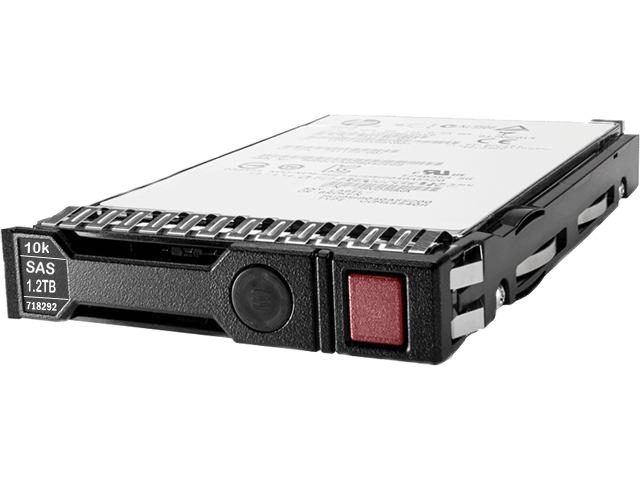
The Drive That Doesn't Flinch: Inside the HPE 718162-B21 and What Makes It a Data Center Workhorse
HPE 718162-B21 1.2TB 10K SAS Hard Drive: The Complete Guide for ProLiant Server Users
If you manage enterprise servers for a living, you already know that storage is never just about space — it is about reliability under pressure, speed when it matters most, and components that simply do not let you down at 2 AM when your business is depending on them. The HPE 718162-B21 is one of those components. A 1.2TB, 10,000 RPM, 2.5-inch SAS hard drive built specifically for HPE ProLiant Gen8, Gen9, and Gen10 servers, it has earned a solid reputation in data centers around the world. This guide breaks down everything you need to know about it — from what makes it tick to how to get the most out of it in your environment.
What Is the HPE 718162-B21?
A Quick Overview of the Drive
The HPE 718162-B21 is an enterprise-class hard disk drive engineered for demanding server workloads. At its core, it is a 2.5-inch Small Form Factor (SFF) drive spinning at 10,000 RPM with a 1.2TB raw capacity. It connects via a Dual Port SAS-6Gbps interface and ships in HPE's Smart Carrier (SC) tray, which enables hot-swap capability — meaning you can pull and replace the drive while the server is still running without any planned downtime.
HPE designed this drive as a genuine server-grade component, not a repurposed desktop or NAS drive. Every specification is aimed at the kind of workload that enterprise environments throw at storage subsystems: heavy read/write cycles, 24/7 operation, and the need for predictable, low-latency performance even under sustained load.
Who Is This Drive For?
This drive is a natural fit for IT administrators, data center engineers, and system architects who are working with HPE ProLiant Gen8, Gen9, or Gen10 servers. Whether you are expanding an existing storage array, replacing a failed drive with a genuine HPE-certified component, or building out a new server deployment, the 718162-B21 is designed to slot right in without compatibility headaches. It is particularly well-suited to environments running databases, virtualization platforms, transactional applications, and any workload where consistent I/O performance is non-negotiable.
Key Technical Specifications
Capacity, Form Factor, and Interface
The 1.2TB capacity sits in a sweet spot for enterprise SAS storage — large enough to hold substantial datasets, yet compact enough in the 2.5-inch SFF form factor to allow high-density deployments in rack-mounted servers. The SAS-6Gbps (Serial Attached SCSI, 6 Gigabits per second) interface delivers a reliable, high-throughput connection that is purpose-built for enterprise environments, as opposed to the consumer-grade SATA interface found in desktop or office storage.
The dual port nature of the SAS interface is worth calling out specifically. Unlike single-port designs, dual port SAS means the drive has two independent data paths. This is critical for high-availability configurations where you need the drive to remain accessible even if one path fails — a scenario that matters enormously in production environments where storage redundancy is a baseline requirement.
Speed and Performance Characteristics
The 10,000 RPM spindle speed is a defining characteristic of this drive class. Compared to 7,200 RPM nearline drives, a 10K SAS drive delivers significantly lower average seek times and rotational latency, which translates directly into faster response times for random I/O operations. If your workloads are I/O-intensive — think SQL Server, Oracle Database, VMware vSphere datastores, or Exchange Server — the performance difference is tangible and measurable.
The drive is rated for continuous duty cycles, reflecting HPE's expectation that it will run uninterrupted in a production environment. The internal cache buffer helps smooth out bursts of write activity, and the SAS protocol itself provides better error recovery and command queuing compared to SATA, making it inherently better suited to multi-user, multi-threaded workloads.
Smart Carrier Hot-Swap Design
HPE's Smart Carrier is more than just a plastic caddy for the drive. It contains embedded intelligence that communicates with the server's management subsystem, allowing HPE iLO (Integrated Lights-Out) and the Smart Array controller to identify the drive, monitor its health status, and manage it through the server's management interface. The carrier also includes the LED indicators that tell you at a glance whether the drive is healthy, active, or in a fault state — invaluable when you are doing a physical walkthrough of a server room.
The hot-swap capability means the drive can be removed and inserted while the server is powered on and operating. When you are managing systems that cannot afford downtime — and in a true enterprise context, most cannot — this feature moves from being a convenience to being an operational necessity. Paired with a RAID configuration, a hot-swap replacement can trigger an automatic rebuild without any human-initiated restart of services.
Compatibility: ProLiant Gen8, Gen9, and Gen10
HPE ProLiant Gen8 Server Support
The HPE 718162-B21 was introduced during the Gen8 era and carries full compatibility with the ProLiant Gen8 server lineup. Gen8 servers brought a significant architectural leap with the introduction of the HPE Smart Array P-series controllers and tighter integration between hardware and iLO 4 management. In Gen8 systems — including the DL360p Gen8, DL380p Gen8, DL560 Gen8, and ML series equivalents — this drive is recognized natively without firmware acrobatics or workarounds.
If you are still running Gen8 servers in production (and many organizations are, given that hardware of that generation remains perfectly capable for many workloads), the 718162-B21 is the right choice when you need a capacity or performance upgrade, or when an existing drive has failed and needs replacing with a supported component.
HPE ProLiant Gen9 Server Support
Gen9 ProLiant servers, which introduced support for Intel Broadwell and Haswell processors along with DDR4 memory on select platforms, continue to support the 718162-B21 without modification. The Gen9 lineup — covering models like the DL360 Gen9, DL380 Gen9, DL560 Gen9, BL460c Gen9, and the broader ML and SL families — shares the same Smart Array controller architecture and LFF/SFF bay design that makes this drive a plug-and-play addition.
Gen9 servers also brought enhancements to HPE's ProLiant support pack and Smart Storage Administrator tool, both of which work seamlessly with drives in the Smart Carrier form factor. This means better visibility into drive health, predictive failure alerts, and integrated spare activation — all things that become extremely important when you are managing storage at scale.
HPE ProLiant Gen10 Server Support
The Gen10 generation introduced HPE's Silicon Root of Trust security architecture and moved to newer Intel Xeon Scalable processors, but the storage subsystem retained backward compatibility with the SAS-6Gbps ecosystem. The HPE 718162-B21 is verified compatible with Gen10 ProLiant systems, including the DL360 Gen10, DL380 Gen10, and their variants. For organizations that have a mixed fleet of Gen8 through Gen10 servers, standardizing on the 718162-B21 simplifies inventory management and reduces the number of spare SKUs you need to keep on hand.
It is worth noting that Gen10 servers also support faster SAS-12Gbps drives, so if you are deploying on Gen10 exclusively and performance is the top priority, you might evaluate whether a 12Gbps drive better serves your long-term needs. However, if you have an existing inventory of 718162-B21 drives or are standardizing across a mixed fleet, this 6Gbps drive operates perfectly in Gen10 bays running at its native 6Gbps speed.
Why SAS Over SATA for Enterprise Use?
Reliability and Error Handling
The decision between SAS and SATA for enterprise storage is not merely a bandwidth argument — it goes much deeper into protocol design and reliability architecture. SAS drives are built to a higher quality standard with tighter manufacturing tolerances. They are rated for higher annual workloads (typically 550TB per year or more, compared to 55–180TB for enterprise SATA), which reflects the reality of 24/7 server operation versus intermittent desktop or NAS use.
SAS also implements a more robust error recovery process. When a SAS drive encounters a read error, it has a strict time limit for recovery before reporting the error to the RAID controller — typically around 7 seconds. SATA drives, by contrast, can spend significantly longer attempting recovery on their own, which in a RAID array can cause the controller to time out and kick a drive out of the array even when it is not truly failed. In practice, this makes SAS drives considerably more stable members of RAID configurations than even enterprise-grade SATA drives.
Dual Port for High Availability
As mentioned earlier, the dual port SAS design provides two independent data paths from the server to the drive. In single-path configurations this is a backup, but in more sophisticated deployments with dual-domain SAS fabrics — where two separate SAS Host Bus Adapters or Smart Array controllers are connected to the same drive — it enables true active-active or active-passive multipathing. For mission-critical applications where storage availability is a core requirement, this capability can be the difference between a single-component fault causing an outage and simply triggering a failover.
Practical Deployment Considerations
Using This Drive in RAID Arrays
The HPE 718162-B21 is designed to work within HPE Smart Array controller-managed RAID arrays, and this is where its enterprise features shine most clearly. When deployed in a RAID 5, RAID 6, RAID 10, or RAID 50 configuration, the Smart Carrier's integrated intelligence feeds health data back to the controller and iLO, enabling features like predictive failure alerting (based on SMART data thresholds) and Spare Activation — where a designated hot spare automatically begins rebuilding the RAID set the moment a drive is flagged as degraded.
For environments running HPE's Dynamic Smart Array (DSA) controllers in Gen9 and Gen10 systems, or the standalone Smart Array Px3x series in Gen8 systems, the 718162-B21 integrates with HPE Smart Storage Administrator (SSA) for centralized management and configuration. This gives administrators a unified interface for configuring RAID levels, monitoring drive health, and managing predictive failure responses across an entire server fleet.
Mixed-Generation Environments
One practical consideration worth addressing is what happens when you have a mix of Gen8, Gen9, and Gen10 servers and you want to standardize storage components. The 718162-B21 makes this relatively straightforward. Because it carries HPE's native firmware and Smart Carrier compatibility across all three generations, you can maintain a single spare drive pool rather than tracking separate SKUs for each server generation. This is not just a convenience — it directly reduces the risk of having the wrong spare on hand when a drive fails at an inconvenient time.
Firmware and Driver Management
Like all HPE-branded drives, the 718162-B21 ships with HPE-specific firmware. Keeping this firmware current is important for stability, compatibility with newer iLO and Smart Array firmware versions, and access to any reliability improvements HPE releases over the drive's service life. HPE makes firmware updates available through the Service Pack for ProLiant (SPP), which bundles all recommended firmware and driver updates for a given generation of server hardware into a single, tested package. Running SPP updates on a regular maintenance cycle is the cleanest way to ensure your drive firmware stays aligned with the rest of your server stack.
Performance in Real-World Workloads
Database and Transactional Applications
For SQL Server, Oracle, PostgreSQL, or similar relational databases, the 10K RPM SAS specification delivers the low-latency random I/O that these workloads demand. Database engines issue large numbers of small random reads and writes — fetching index pages, writing transaction logs, updating data pages — and the combination of the 10K spindle speed, SAS command queuing, and enterprise-grade caching makes the 718162-B21 a capable performer in this role. In tiered storage architectures where SSDs handle the hottest data, SAS HDDs like this one form an effective second tier for warm or less-latency-sensitive data.
Virtualization Platforms
VMware vSphere, Microsoft Hyper-V, and KVM/QEMU environments place complex, multiplexed I/O demands on storage. Multiple virtual machines issue concurrent read and write requests that arrive at the storage layer interleaved in ways that individual VMs never anticipate. The deep command queue depth of the SAS protocol allows the drive's firmware to reorder and optimize these requests in ways that improve throughput significantly over what raw queue order would produce. For virtualized environments where storage is shared among tens or hundreds of VMs, having well-specified physical drives matters more than many administrators initially expect.
File and Application Servers
File servers, web application servers, and general-purpose workload servers benefit from the 718162-B21's balance of capacity and performance. At 1.2TB per drive, a RAID 10 array of eight drives gives you just under 5TB of usable space with excellent read performance and good write redundancy — a configuration well-suited to a busy application server or a file server supporting a department of several hundred users. The hot-swap capability means that even in these less-demanding (relative to databases) environments, drive failures can be addressed during business hours without scheduling maintenance windows.
Understanding HPE's Smart Carrier Technology
What the Smart Carrier Does
HPE's Smart Carrier is an engineering detail that makes a noticeable difference in day-to-day management. The carrier contains an embedded microcontroller that communicates with the server's backplane and, through it, with iLO and the Smart Array controller. This communication channel allows the server to display the drive's identity, status, and health in the iLO web interface without requiring physical inspection of the drive bay. When a drive fails or begins to show signs of degradation, iLO can illuminate the drive bay's amber LED, send an alert email, generate an SNMP trap, or trigger an integration with your monitoring platform — all automatically and without any manual intervention.
The Smart Carrier also supports HPE's Intelligent Provisioning workflow for server setup, where the system can detect all installed drives and help the administrator configure storage during initial server deployment. This reduces the friction of getting a new server into production and minimizes the risk of configuration errors during setup.
Hot-Swap: More Than Just Swapping Drives
Hot-swap is often taken for granted as a commodity feature, but the implementation in HPE ProLiant systems with Smart Carriers is worth appreciating. When you insert a drive, the backplane signals the Smart Array controller, which identifies the drive and determines whether it should be treated as a new drive to be configured, a replacement for a degraded array member, or a hot spare. This automated recognition and classification process happens within seconds of drive insertion and requires no administrator action beyond physically installing the drive. In a busy data center where a storage technician might be swapping drives across dozens of servers in a day, this automation is genuinely valuable.
Sourcing and Authenticity
Why HPE-Branded Drives Matter
Enterprise server manufacturers including HPE qualify specific drives — firmware, carrier design, and all — for use in their systems. When you install an HPE-branded drive in a ProLiant server, the Smart Array controller recognizes it as a qualified component, iLO can monitor all its SMART attributes, and the drive is eligible for support under HPE's warranty and support agreements. Using non-HPE or third-party SAS drives in HPE servers can result in reduced functionality — loss of carrier LED management, limited SMART monitoring, and in some cases, the Smart Array controller may display warnings or limit functionality when unrecognized drives are detected.
For organizations with HPE hardware support contracts — including HPE Pointnext services or third-party support agreements — using HPE-certified drives like the 718162-B21 helps avoid scenarios where a storage failure might be complicated by questions about component certification.
New vs. Refurbished
The HPE 718162-B21 is available from HPE directly, from authorized channel partners, and from the secondary market as a refurbished or recertified component. Refurbished drives can be a cost-effective choice, particularly for extending the life of older Gen8 servers or for maintaining a spare drive inventory without the cost of new units. When sourcing refurbished drives, it is important to verify that they include the Smart Carrier (not just a bare drive), that the carrier LEDs function correctly, and ideally that the drive has been tested with a full media scan and SMART verification before purchase.
For production environments where a storage failure carries significant business risk, new drives with full warranty coverage are the more prudent investment. For development, test, or non-critical environments, quality-tested refurbished units from reputable suppliers can be a sensible alternative.
Summary: Is the HPE 718162-B21 Right for Your Environment?
The HPE 718162-B21 represents a well-rounded enterprise storage component that has proven itself across multiple server generations. Its 1.2TB capacity, 10,000 RPM performance, dual port SAS-6Gbps interface, and Smart Carrier hot-swap design address the real operational concerns of enterprise IT — not just raw specifications, but the reliability, manageability, and serviceability that determine whether storage is an asset or a headache.
If you are running HPE ProLiant Gen8, Gen9, or Gen10 servers and you need a storage component that integrates cleanly with HPE's management ecosystem, performs consistently under demanding workloads, and can be serviced without planned downtime, the 718162-B21 is a drive that earns its place in your rack. It is not the newest drive on the market — HPE's storage lineup has continued to evolve — but for environments built on the ProLiant Gen8 through Gen10 platform, it remains a reliable, well-supported, and operationally proven choice.
Whether you are refreshing storage capacity, replacing aging drives on a lifecycle schedule, or building out new storage in existing servers, understanding what this drive brings to the table helps you make a confident purchasing decision. And in enterprise IT, confident purchasing decisions — backed by solid specifications and real-world validation — are the foundation of infrastructure you can rely on.
Recent Posts
-

HPE AG804A 450GB: The 15K Fibre Channel Powerhouse Built for HPE EVA Storage
HPE AG804A 450GB 15000RPM Fibre Channel Hard Drive The HPE AG804A 450GB 15000RPM 3.5-inch Large Form …Sep 12th 2026 -

Enterprise Storage That Keeps Going: HPE AP731A 450GB Fibre Channel HDD
HPE AP731A 450GB 10000RPM Fibre Channel Hard Drive The HPE AP731A 450GB 10000RPM 3.5-inch Large Form …Sep 11th 2026 -

Where Enterprise Speed Meets Trusted Storage: HPE AP731B 450GB 10K Fibre Channel Hard Drive
HPE AP731B 450GB 10000RPM Fibre Channel Hard Drive: Reliable Storage for Enterprise EVA Environments …Sep 10th 2026