
No Drama, Just Data: Why the HPE E7W47A Is the Drive IT Teams Trust at 2 AM
The HPE E7W47A 1.2TB 10K SAS Hard Drive: A Storage Workhorse That Refuses to Quit
If you've ever managed a SAN environment, you know the feeling. Something in your storage array starts throwing warnings at 2 AM, your monitoring dashboard turns an unfriendly shade of red, and suddenly you're hunting for a replacement drive that actually fits your HPE Modular Smart Array without weeks of waiting or guesswork. That's exactly the gap the HPE E7W47A fills, and it does it without drama.
This isn't a flashy product. It's not going to trend on tech forums or get unboxing videos with dramatic music. But for IT professionals who care about uptime, predictability, and not getting paged in the middle of the night, this drive is quietly one of the most dependable components you can drop into your storage infrastructure.
Let's walk through why.
What Exactly Is the HPE E7W47A?
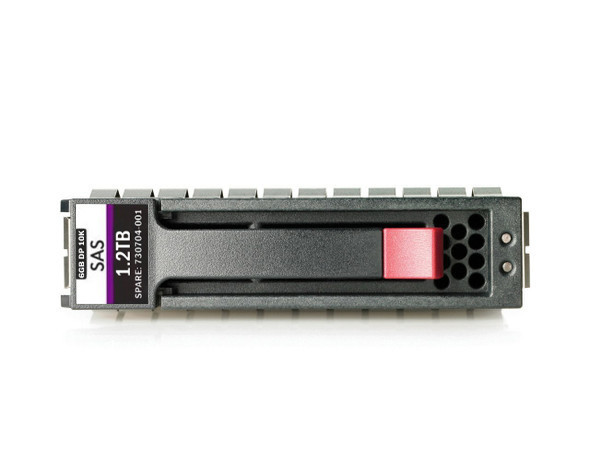
The HPE E7W47A is a 1.2TB enterprise-grade hard drive spinning at 10,000 RPM, built in the compact 2.5-inch small form factor (SFF) that's become the standard in modern data centers. It uses a SAS-6Gbps dual-port interface, and it's designed specifically to slot into HPE's Modular Smart Array (MSA) 1040 and 2040 SAN storage systems.
In plain English: it's a hard drive built for businesses that can't afford storage hiccups, designed to live inside systems that serve as the backbone of company data.
Breaking Down the Name
HPE part numbers look intimidating until you realize they're basically a spec sheet in disguise.
- 1.2TB — the storage capacity, a comfortable middle ground between cost and capacity for enterprise workloads
- 10000RPM — the spindle speed, which directly affects how fast data gets read and written
- 2.5-inch SFF — the physical size, smaller and more power-efficient than older 3.5-inch drives
- Dual Port SAS-6Gbps — the connection type and speed, built for redundancy and throughput
- Hot-Swap — meaning you can pull it and replace it without powering anything down
Once you see it broken down like that, the product name stops looking like a string of random letters and starts reading like a promise.
Why 10K RPM Still Matters in an SSD World
It's a fair question. Solid-state drives are everywhere now, so why would anyone still reach for a spinning disk in 2026?
The honest answer is cost-per-terabyte and workload fit. Not every storage tier needs the blistering speed of flash. Plenty of enterprise environments use a tiered approach: fast SSDs for the data that gets hit constantly, and reliable 10K SAS drives like this one for everything else that needs to be fast enough, always available, and budget-friendly at scale.
The Sweet Spot Between Speed and Storage
A 10,000 RPM drive sits in a nice middle zone. It's noticeably quicker than the older 7,200 RPM drives that dominate consumer and archival storage, while staying far more affordable per terabyte than SSDs when you're filling out a multi-bay array. For SAN environments running databases, virtual machines, or shared file storage, that balance often makes more financial sense than going all-flash.
Dual-Port SAS: The Quiet Hero of Enterprise Reliability
Here's something that doesn't get talked about enough: redundancy at the drive level.
Most consumer drives have a single data path. If that path fails, you lose access, full stop. The E7W47A's dual-port SAS design means there are two independent connections to the drive. If one controller path has an issue, the second path keeps the data flowing. It's the storage equivalent of having a backup generator that kicks in before you even notice the lights flickered.
Why This Matters for SAN Storage Specifically
SAN systems like the MSA 1040 and 2040 are usually serving multiple servers and applications at once. A single point of failure anywhere in that chain can ripple outward fast. Dual-port connectivity is part of what makes these arrays suitable for production environments where downtime isn't just inconvenient, it's expensive.
Built for Hot-Swap, Built for Sanity
Nobody wants to schedule a maintenance window just to replace one failing drive. The hot-swap capability of the E7W47A means a technician can pull the failed unit and insert a replacement while the array stays online and serving data. RAID rebuilds happen in the background, and in most well-configured environments, the people actually using the storage never even know anything happened.
A Small Feature With a Big Impact
It sounds simple, but hot-swap support is one of those features that separates enterprise hardware from everything else. It turns a potential outage into a non-event. That's the entire philosophy behind this drive: handle the failure gracefully, keep the business running, and let the IT team fix things on their own schedule instead of being forced into a crisis.
Perfect Pairing: HPE MSA 1040 and 2040 Compatibility
This drive isn't a generic, fits-everywhere component. It's purpose-built and validated for HPE's MSA 1040 and 2040 storage arrays, which are popular mid-range SAN solutions for small to medium-sized businesses and departmental storage needs.
Why Compatibility Isn't Just a Checkbox
Using a drive that HPE has specifically validated for these systems isn't just about avoiding a "this part doesn't fit" moment. It's about firmware compatibility, predictable performance under the array's controller logic, and keeping your support agreements intact. Mixing in unvalidated third-party drives can sometimes introduce subtle issues that are maddening to troubleshoot, or worse, void your support coverage entirely.
Who Actually Needs This Drive?
Let's be real, this isn't a drive for someone building a home media server. This is for:
- IT teams maintaining HPE MSA-based SAN infrastructure
- Businesses needing to replace a failed or aging drive in an existing array
- Organizations expanding storage capacity in a current MSA 1040 or 2040 deployment
- Data centers that prioritize proven reliability over chasing the newest tech trend
The Replacement Scenario Most Buyers Are In
Realistically, a huge number of people searching for this exact part number are doing it because a drive just failed and they need an exact, compatible replacement fast. If that's you, the good news is this is precisely the kind of component designed for that exact moment: predictable, validated, and ready to slot in without surprises.
The Bottom Line
The HPE E7W47A isn't trying to impress anyone with flashy marketing. It's a 1.2TB, 10K RPM, dual-port SAS drive built to do one job extremely well: keep HPE MSA 1040 and 2040 storage arrays running reliably, day after day, without drama. For IT professionals who value uptime over hype, that quiet dependability is exactly the point.
Sometimes the best technology isn't the one you notice. It's the one that just works, quietly, in the background, so you can go home on time.
Recent Posts
-
No Drama, Just Data: Why the HPE E7W47A Is the Drive IT Teams Trust at 2 AM
The HPE E7W47A 1.2TB 10K SAS Hard Drive: A Storage Workhorse That Refuses to Quit If you've ever man …Jun 21st 2026 -
Mesh, Match, Multiply: How the HPE E7X49A Keeps 3PAR's Mesh-Active Magic Alive
The Quiet Backbone of 3PAR: Why the HPE E7X49A Just Keeps Spinning There's a particular kind of reli …Jun 20th 2026 -
Signed, Sealed, Spinning: Inside the HPE 870757-B21's Trust Architecture
Trust, Verified: How the HPE 870757-B21 Locks Down ProLiant Storage Integrity There's a particular k …Jun 19th 2026