
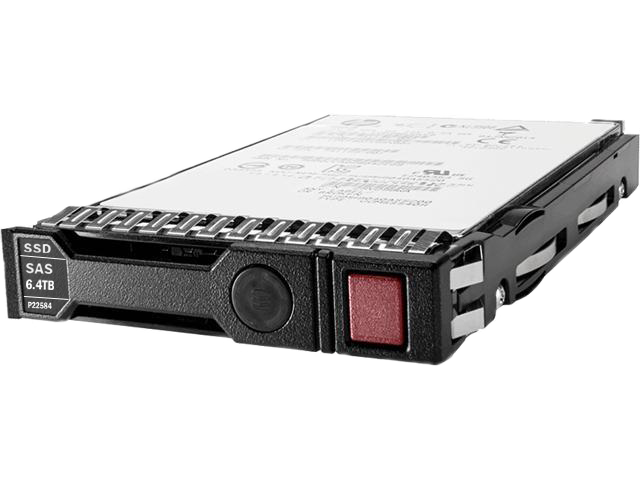
Turbocharge Your ProLiant: Meet the HPE P21137-B21 6.4TB SAS SSD Built for Secure, Mixed-Use Speed
HPE P21137-B21 6.4TB 2.5" SFF Digitally Signed Firmware SAS-12Gbps Smart Carrier Mixed Use SSD (for ProLiant Gen8/Gen9/Gen10)
If you’re upgrading or expanding storage in HPE ProLiant Gen8, Gen9, or Gen10 servers, the HPE P21137-B21 is a high-capacity, enterprise-class SSD built for consistent performance, security, and platform compatibility. This model delivers 6.4TB in a 2.5-inch Small Form Factor (SFF) drive, uses a 12Gbps SAS interface, and includes HPE Digitally Signed Firmware and the HPE Smart Carrier for enhanced manageability.
What the HPE P21137-B21 SSD Is (And Who It’s For)
The HPE P21137-B21 is designed for organizations that need an SSD optimized for mixed read/write workloads—common in virtualization, databases, private cloud, and transactional applications—while maintaining the enterprise features expected in HPE server environments.
Ideal environments and workloads
- Virtualization clusters (VMware, Hyper-V, Proxmox) with mixed I/O profiles
- Databases that generate sustained reads and writes (OLTP, reporting mixes)
- VDI environments that see bursty writes and steady reads
- Business-critical applications where uptime and predictable latency matter
- Storage consolidation where higher capacity per bay reduces footprint
Key Specifications at a Glance
This drive’s value comes from combining high capacity, SAS performance, and HPE-specific management/security features for ProLiant servers.
Core specs (as described for this model)
- Model/Part Number: HPE P21137-B21
- Capacity: 6.4TB
- Form Factor: 2.5-inch SFF
- Interface: SAS 12Gbps
- Firmware: Digitally Signed (DS)
- Carrier: HPE Smart Carrier (SC)
- Workload class: Mixed Use (MU)
- Server compatibility: HPE ProLiant Gen8 / Gen9 / Gen10
Note: Endurance (DWPD), NAND type, and exact performance metrics can vary by SSD family and revision. For sizing and lifecycle planning, confirm endurance specs against your workload profile.
Why 12Gbps SAS Matters in ProLiant Servers
While SATA SSDs can be cost-effective, SAS SSDs are often chosen in servers for better enterprise alignment, backplane compatibility, and controller feature support.
Benefits of SAS-12Gbps in server storage
- Higher bandwidth headroom than SATA (useful in multi-drive arrays)
- Better integration with SAS HBAs/RAID controllers commonly deployed in ProLiant servers
- Dual-port capability (in many SAS enterprise SSD designs) for high availability designs when supported by the platform
- Optimized for sustained workloads typical in data centers
Mixed Use SSD: The Best Fit for Balanced Read/Write Applications
HPE’s Mixed Use (MU) category generally targets workloads that are neither read-heavy nor write-only. It’s a practical “middle ground” when you need better write tolerance than read-intensive SSDs without the higher cost of full write-intensive models.
When Mixed Use is the right choice
- Your workload includes frequent writes (logging, indexing, VM churn, temp tables)
- You want an SSD tier that can handle steady daily activity without premature wear
- You need an all-purpose SSD type for general server acceleration
Example use cases
- VM datastores with multiple tenants
- Database volumes (data + indexes) with steady updates
- Application servers with caching plus persistent writes
- Shared storage inside a server (RAID sets) supporting mixed traffic
Digitally Signed Firmware (DS): Security and Authenticity You Can Validate
Firmware integrity is a growing concern in enterprise infrastructure. HPE Digitally Signed Firmware helps ensure the drive’s firmware is verified and trusted within HPE’s ecosystem.
Why digitally signed firmware is important
- Helps reduce risk from unauthorized or tampered firmware
- Supports security-minded IT policies and compliance initiatives
- Improves confidence during maintenance cycles and drive replacements
- Aligns with modern supply-chain and platform security expectations
HPE Smart Carrier (SC): Faster Serviceability and Better Visibility
The HPE Smart Carrier is more than a drive tray. It’s designed to simplify operations in racks and reduce mistakes during maintenance.
Operational advantages of the Smart Carrier
- Clear drive status indication (activity/fault/location—depending on server model and configuration)
- Easier identification of the correct drive during hot-swap procedures
- Better alignment with HPE’s management tooling and service workflows
- Helps reduce downtime by minimizing human error during replacements
Compatibility with ProLiant Gen8, Gen9, and Gen10 Servers
A major reason to choose an HPE-branded SSD like the P21137-B21 is platform compatibility—both mechanical (carrier/backplane) and logical (firmware/management).
What to verify before purchasing
- Server generation and drive bays: confirm you have 2.5" SFF bays
- Backplane interface: SAS 12Gbps backplanes/controllers are ideal (drive can still function in some mixed environments, but confirm your platform)
- RAID/HBA controller support: ensure your controller supports the drive class and capacity
- Firmware baselines: keep server BIOS/iLO/Smart Array firmware reasonably current for best interoperability
Performance and Capacity Benefits: Why 6.4TB in SFF Is a Big Deal
A 6.4TB SSD in a 2.5" bay is a powerful density upgrade—especially in servers where bay count is limited.
Practical advantages of 6.4TB SFF capacity
- More storage per RU without expanding chassis count
- Fewer drives needed for a target capacity, which can mean:
- lower power and cooling per TB
- fewer failure points across the array
- simpler inventory and spares strategy
- Strong fit for all-flash RAID sets inside ProLiant servers
Common Deployment Scenarios (RAID, Virtualization, Databases)
The HPE P21137-B21 is typically used where organizations want enterprise SSD reliability with predictable behavior under mixed workloads.
RAID configurations in ProLiant servers
- RAID 1 for OS and critical boot volumes (pairing for redundancy)
- RAID 5/6 for capacity-efficient application storage (consider write penalty and controller cache strategy)
- RAID 10 for performance + resilience (often preferred for databases/VM datastores)
Virtualization datastore build-out
- Use multiple SSDs in RAID 10 to balance performance and redundancy
- Separate high-write workloads (logs/swap) when possible if your environment is write-heavy
- Monitor latency and write amplification using your hypervisor and storage controller tools
Buying Tips: How to Choose the Right Enterprise SSD for Your Server
A “best” SSD depends on workload, endurance needs, and server configuration. Use these checkpoints to ensure the P21137-B21 fits your environment.
Selection checklist
- Workload type: mixed use is best for balanced I/O
- Endurance planning: estimate write volume/day and match it to the SSD’s endurance rating (consult the official specs)
- Controller compatibility: confirm Smart Array/HBA support and firmware recommendations
- Lifecycle and spares: keep at least one compatible spare drive for faster recovery
- Management requirements: if you rely on HPE tooling, HPE-certified drives help ensure consistent monitoring/alerts
Where to Buy HPE P21137-B21
For current availability and purchasing details for the HPE P21137-B21 6.4TB 2.5" DS SAS 12G Smart Carrier Mixed Use SSD, use this product page:
Product page
FAQs About the HPE P21137-B21 SSD
Is this SSD compatible with HPE ProLiant Gen8, Gen9, and Gen10?
Yes—this model is positioned for ProLiant Gen8/Gen9/Gen10 platforms. Always confirm your server’s bay type (2.5" SFF) and SAS backplane/controller compatibility.
What does “Mixed Use” mean for SSDs?
It indicates the SSD is designed for balanced read/write workloads, making it suitable for virtualization, databases, and general enterprise applications that write data regularly.
Why choose SAS over SATA for a ProLiant server SSD?
SAS is a common enterprise standard in ProLiant storage stacks, offering 12Gbps bandwidth, strong controller integration, and features often preferred in data centers.
What is Digitally Signed Firmware?
It means the drive firmware includes cryptographic verification to help ensure authenticity and reduce the risk of unauthorized firmware.
Final Takeaway
The HPE P21137-B21 6.4TB SFF SAS-12Gbps Mixed Use SSD is a strong option for IT teams looking to boost performance and density in HPE ProLiant Gen8/Gen9/Gen10 servers—while also benefiting from Digitally Signed Firmware and the HPE Smart Carrier for secure, manageable operations.
If you tell me your server model (e.g., DL380 Gen9) and your intended RAID level/workload, I can suggest a practical drive count and configuration approach.
Recent Posts
-
Turbocharge Your ProLiant: Meet the HPE P21137-B21 6.4TB SAS SSD Built for Secure, Mixed-Use Speed
HPE P21137-B21 6.4TB 2.5" SFF Digitally Signed Firmware SAS-12Gbps Smart Carrier Mixed Use SSD (for …Apr 12th 2026 -
Unleash Gen10 NVMe Power: HPE P13674-B21 6.4TB U.3 SSD for Fast, Secure Mixed-Use Workloads
HPE P13674-B21 6.4TB 2.5-Inch SFF NVMe U.3 PCIe Mixed Use SSD for ProLiant Gen10 Servers …Apr 11th 2026 -
Turbocharging Your Gen10: The HPE P09096-B21 6.4TB SAS SSD That Packs Security, Speed, and Serious Capacity Into One Smart Carrier
HPE P09096-B21 6.4TB 2.5-inch SFF Digitally Signed Firmware MLC SAS-12Gbps Smart Carrier Mixed …Apr 10th 2026