
Six of a Kind: The HPE R0P85A Bundle That Stacks the Odds in Your Favor
Not Flash, But Fearless — The HPE R0P85A 7.2TB 6-Pack SAS Drive Bundle That Means Business
Why the HPE R0P85A Is More Than Just Six Hard Drives in a Box
There's something quietly brilliant about the way HPE packages the R0P85A. On the surface, it looks simple — six 1.2TB enterprise SAS hard drives bundled together under a single part number. But when you look closer, you realize this isn't just a convenience purchase. It's a deliberate, thoughtfully engineered storage deployment kit designed to help administrators hit the ground running with their HPE Modular Smart Array 2050 or 2052 SAN without the headache of sourcing, validating, and installing individual drives one at a time.
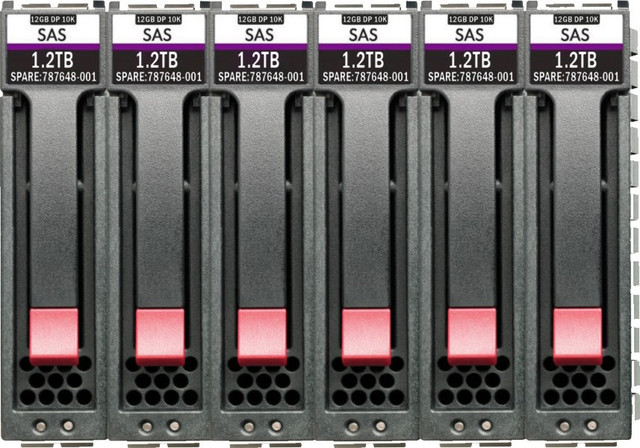
The HPE R0P85A bundles six units of the proven J9F48A — the 1.2TB, 10,000 RPM, 2.5-inch SFF, Dual Port SAS-12Gbps enterprise hard drive — into a single, validated package delivering 7.2TB of raw enterprise-class storage capacity right out of the box. For storage administrators who need to populate an MSA 2050 or 2052 quickly, cleanly, and with full HPE support coverage, the R0P85A is the answer.
In this guide, we'll explore every dimension of the R0P85A — what makes this bundle valuable, how it performs in the MSA 2050/2052 environment, how to deploy it intelligently, and why buying a validated six-pack beats piecing together individual drives for most organizations.
Breaking Down the HPE R0P85A Bundle — What You're Actually Getting
Understanding the R0P85A starts with understanding exactly what comes in the package and why each component was chosen.
Six Units of the J9F48A — The Foundation of the Bundle
Each of the six drives in the R0P85A is an HPE J9F48A — a 1.2TB, 10K RPM, 2.5-inch SFF, Dual Port SAS-12Gbps enterprise hard drive. These drives are individually validated for HPE MSA platforms and carry enterprise-class firmware tuned specifically for HPE controller environments.
The J9F48A is not a generic OEM drive rebranded with an HPE sticker. It carries HPE-specific firmware modifications that control error recovery behavior, queue depth, power management, and vibration compensation — all optimized to work harmoniously with the MSA 2050 and 2052 controllers. When you buy the R0P85A, you're getting six of these drives, all matched, all validated, all ready to install.
7.2TB Raw Capacity — What That Means in Practice
Six drives at 1.2TB each delivers 7.2TB of raw, unformatted capacity. In a real-world RAID deployment, your usable capacity will be lower depending on your chosen RAID level:
- RAID 5 (6 drives): Approximately 6.0TB usable — one drive's worth of capacity used for parity
- RAID 6 (6 drives): Approximately 4.8TB usable — two drives' worth used for dual parity protection
- RAID 10 (6 drives): Approximately 3.6TB usable — half the capacity mirrored for maximum performance and redundancy
- RAID 50 (6 drives split as 2x RAID 5): Approximately 4.8TB usable with improved performance characteristics
For most mid-sized organizations populating an MSA 2050 or 2052 as a primary SAN, a RAID 5 or RAID 6 configuration built from R0P85A drives provides a strong starting point — offering a meaningful balance of capacity, protection, and performance.
HPE SmartDrive Carrier Included
Each J9F48A in the bundle ships in an HPE SmartDrive carrier, the tool-free hot-plug tray system used across HPE's MSA and ProLiant server platforms. The carrier includes a secure locking mechanism and a bi-color LED indicator that communicates drive status at a glance — green for healthy, amber for fault or activity warning. This carrier design allows failed drives to be identified and swapped in seconds without powering down the system or disrupting connected hosts.
The Target Platform — HPE MSA 2050 and MSA 2052
The R0P85A is specifically engineered and validated for two arrays: the MSA 2050 and the MSA 2052. These are the next-generation successors to the MSA 2040, and they represent a meaningful step forward in HPE's midrange SAN storage lineup.
HPE MSA 2050 — Performance-Optimized Midrange SAN
The MSA 2050 is a dual-controller SAN array that supports 16Gbps Fibre Channel and 10GbE iSCSI host connectivity. It's designed for organizations that need reliable shared storage with active-active controller operation, thin provisioning, snapshots, and volume replication — enterprise features at a mid-market price point.
The 2050 is built around the concept of tiered storage, where hot data automatically migrates to faster media (SSDs) while cooler data resides on spinning drives. In this architecture, R0P85A drives are perfectly positioned as the performance spinning tier or as the sole storage tier in cost-optimized all-HDD configurations.
HPE MSA 2052 — Flash-Ready Hybrid Configuration
The MSA 2052 takes the 2050's foundation and adds first-class support for SSD caching and hybrid storage tiers. It ships with SSD cache drives pre-installed in some configurations and is designed to maximize the performance lift you get when combining SSDs with spinning drives.
In an MSA 2052 deployment, R0P85A HDD drives typically serve as the capacity tier — storing the bulk of your data at scale — while SSDs handle the fastest, most frequently accessed data. This tiered approach allows organizations to enjoy near-flash performance for hot workloads without paying all-flash prices for every gigabyte of storage they need.
What Changed from the MSA 2040?
If your organization is upgrading from an MSA 2040 environment where you already used J9F48A drives, the transition to the 2050 or 2052 is highly familiar. The drive format, carrier, and interface are consistent across generations. The MSA 2050/2052 controllers offer improved processing power, faster cache, and better scalability — but the drives themselves are the same trusted hardware you already know.
Performance Analysis — Six 10K SAS Drives Working in Concert
A single J9F48A is capable. Six of them, working together in a RAID configuration on an MSA 2050 or 2052, is where the performance story gets genuinely compelling.
Aggregate IOPS in RAID Configurations
A single J9F48A delivers approximately 150–200 random 4K IOPS under typical mixed workloads. In a RAID 5 stripe across all six drives, the array can serve read requests from multiple drives simultaneously. For a read-heavy workload, you can expect aggregate read performance approaching 700–900 IOPS from a six-drive RAID 5 set — a significant step up from a single drive.
Write performance in RAID 5 is moderated by the parity calculation overhead, but the MSA 2050/2052's controller cache absorbs write bursts efficiently, presenting smooth and consistent write latency to connected hosts.
Sequential Throughput — Moving Large Data Fast
For sequential workloads, six J9F48A drives in a RAID 5 set can deliver combined sequential read throughput in the range of 700–900 MB/s — well within the capability of the MSA's 16Gbps Fibre Channel host interface. This makes the R0P85A bundle an excellent fit for workloads that mix transactional I/O with periodic large sequential operations, such as database backups, log archiving, or VM snapshot operations.
Latency Characteristics Under Load
One of the real-world advantages of 10K RPM SAS over nearline alternatives is latency consistency. Under sustained mixed I/O, nearline 7.2K drives can exhibit latency spikes as the drive struggles to keep up with the queue depth. The J9F48A's higher rotational speed keeps average seek times lower and latency more predictable — an important consideration for virtualized environments where multiple VMs compete for storage access simultaneously.
The Role of the MSA Controller Cache
The MSA 2050 and 2052 controllers include a read/write cache with battery- or capacitor-backed protection, ensuring that cached writes are preserved through a power interruption. This cache layer is critical for write-intensive workloads: it absorbs bursts of write activity and drains them to the drives asynchronously, presenting dramatically lower write latency to the host than the drives could deliver on their own.
When the R0P85A drives are paired with the MSA's controller cache, the effective write performance profile is substantially better than raw drive specs suggest.
Why a 6-Pack Bundle Makes Operational Sense
You might wonder: why not just buy six individual J9F48A drives? It's a fair question, and the answer involves more than just convenience.
Single Part Number, Single Procurement Event
In organizations with formal procurement processes — purchase orders, vendor approvals, budget tracking — every line item creates administrative overhead. Buying a single R0P85A part number versus six individual J9F48A part numbers simplifies quoting, approval, and receiving. It's one SKU, one order, one delivery, one line on the invoice. For IT procurement teams managing tight project timelines, this matters.
Matched Drive Lots for Consistency
When you order the R0P85A bundle, you receive six drives from a matched or closely related manufacturing lot. This matters in enterprise storage for a subtle but important reason: drives from the same manufacturing batch tend to exhibit very similar wear characteristics. They age together, which means if one drive is approaching its wear limits, it's a useful indicator to prepare for the others — and RAID rebuilds between matched drives tend to complete more predictably.
Sourcing six individual drives separately — potentially from different lots, different resellers, or even different manufacturing runs — introduces more variability into your array's long-term behavior.
Validated as a Set Under HPE Support
HPE's support infrastructure recognizes the R0P85A as a bundle, which means your support contract can cover the entire set under a single entitlement. When you log a case, HPE support can see that your array is running a validated six-drive configuration, which simplifies diagnosis and accelerates resolution.
Cost Efficiency vs. Individual Drive Pricing
Bundle pricing for the R0P85A is typically more favorable than purchasing six J9F48A units individually at list price. The savings vary by reseller and market conditions, but organizations purchasing for a full array population generally achieve better unit economics through the bundle than through per-drive procurement.
Real-World Use Cases for the R0P85A in MSA 2050/2052 Environments
The R0P85A isn't a one-trick drive bundle. It serves a wide range of enterprise workloads effectively.
Primary Storage for Virtualized Workloads
VMware vSphere and Microsoft Hyper-V environments running on an MSA 2050 or 2052 are among the most natural homes for R0P85A drives. Six 10K SAS drives in a RAID 5 configuration provide a datastore that handles mixed VM I/O — boot storms, database queries, file service requests — with the consistency that virtualized environments demand.
For a small to medium enterprise running 20–60 virtual machines on an MSA 2050, an R0P85A-based RAID group provides a practical starting point that can be expanded as VM density grows.
SQL Server and Oracle Database Storage
Relational databases are among the most demanding storage consumers in an enterprise environment. The combination of high random IOPS, consistent low latency, and the MSA controller's write caching makes R0P85A drives well-suited for hosting database data files, log files, and tempdb volumes.
For organizations running SQL Server Standard or Oracle Database SE2 on modest hardware budgets, an MSA 2052 populated with R0P85A drives provides enterprise-grade storage reliability without the cost of an all-flash array.
Microsoft Exchange and Collaboration Platforms
Exchange Server generates a demanding mix of small random reads and writes — the kind of I/O pattern that separates enterprise drives from consumer-grade alternatives. The J9F48A's 10K rotational speed and high queue depth handling make it suitable for Exchange mailbox databases, particularly in organizations with hundreds of mailboxes served from a single MSA array.
Capacity Tier in a Tiered MSA 2052 Configuration
One of the most powerful deployment scenarios for the R0P85A is as the capacity tier in a hybrid MSA 2052 that also includes SSDs. In this architecture, the MSA's automated storage tiering moves frequently accessed data to the SSD tier while less-active data resides on the R0P85A drives. The result is near-flash performance for hot data, with cost-effective spinning storage handling the rest.
This tiered approach allows organizations to achieve dramatically better performance than a pure HDD configuration while spending significantly less than an all-flash alternative.
Disaster Recovery and Replication Targets
The MSA 2050 and 2052 support remote volume replication to a secondary array over Fibre Channel or iSCSI links. An R0P85A-populated secondary MSA serves as a cost-effective replication target — providing a recent copy of production data at a DR site without requiring the same investment as the primary array.
Deployment Best Practices for the R0P85A
Getting the most out of your R0P85A investment requires thoughtful deployment decisions. Here are the practices that experienced storage administrators follow.
Populate Drives Evenly Across Enclosure Slots
The MSA 2050 and 2052 enclosures are designed with specific slot assignments for optimal controller access and thermal management. Consult HPE's MSA 2050/2052 QuickSpecs and setup guide for the recommended drive population sequence. Filling drives in the correct order ensures balanced load across both controllers and appropriate airflow through the enclosure.
Always Designate a Global Hot Spare
With six drives in the R0P85A bundle, a common deployment is to assign five drives to a RAID 5 or RAID 6 group and designate the sixth as a global hot spare. When any drive in any RAID group fails, the array automatically begins rebuilding onto the hot spare — keeping your data protected without requiring immediate human intervention.
At 1.2TB per drive, a RAID 5 rebuild on the MSA 2050/2052 typically completes within two to four hours under normal array load — a reasonable window of single-drive vulnerability that can be shortened by minimizing array activity during the rebuild.
Monitor Drive Health Proactively
The MSA 2050 and 2052 management interface — accessible via HPE's MSA Storage Manager GUI or REST API — surfaces drive health metrics including SMART data, error counts, and temperature readings. Set up email alerts or integrate with your monitoring platform (SolarWinds, Nagios, Zabbix, or HPE's own InfoSight) so that early warning signs of drive degradation are caught before a full failure occurs.
Plan Your Expansion Path
The R0P85A is typically a starting configuration, not a final one. MSA 2050 and 2052 arrays support expansion shelves that add additional drive bays as your capacity needs grow. When planning your initial R0P85A deployment, consider what the expansion path looks like — how many additional drives you may need in 12 to 24 months, and whether your array configuration accommodates adding drives to an existing RAID group or requires creating new disk groups.
Firmware Currency
Before going live with your R0P85A drives, verify that both the MSA controller firmware and the drive firmware are current. HPE releases periodic updates that address reliability improvements and compatibility refinements. Keeping firmware current is one of the simplest and highest-value maintenance tasks for any enterprise storage environment.
Comparing the R0P85A Bundle to Building Your Own Six-Drive Configuration
Some administrators consider building a six-drive configuration by sourcing J9F48A drives individually. Here's an honest comparison.
HPE R0P85A Bundle vs. 6x Individual J9F48A Drives
| Factor | R0P85A Bundle | 6x Individual J9F48A |
|---|---|---|
| Part Numbers to Manage | 1 | 6 |
| Manufacturing Lot Consistency | High | Variable |
| Bundle Pricing Available | Yes | No |
| HPE Support as a Set | Yes | Individual coverage |
| Procurement Complexity | Low | Higher |
| Availability Risk | Single source event | Distributed |
The primary risk of the bundle approach is that if the R0P85A is out of stock, you can't partially fulfill the order. Individual drive procurement offers more flexibility in that scenario. For most organizations, however, the operational and procurement simplicity of the bundle outweighs this risk.
Final Verdict — The R0P85A Is the Smart Way to Start an MSA 2050/2052 Deployment
The HPE R0P85A doesn't try to be flashy. It doesn't promise all-flash performance or bleeding-edge NVMe speeds. What it does — with remarkable consistency and reliability — is give enterprise storage administrators a clean, validated, fully supported foundation for spinning drive storage in the MSA 2050 and 2052 ecosystem.
The six-pack format is not an accident of convenience. It's a deployment philosophy: arrive on-site with everything you need, install with confidence, and know that every drive in your array is running validated firmware on a platform its manufacturer tested specifically for this environment. That peace of mind is worth something real in production environments where downtime has a cost measured in revenue, reputation, and the sleep quality of on-call administrators.
Whether you're standing up a new MSA 2050 for a growing virtualized environment, building a DR replication target, or adding a capacity tier to a hybrid MSA 2052, the R0P85A gives you a reliable, professionally supported starting point — and a clear path to expand from there.
Quick Reference — HPE R0P85A Specifications Summary
| Specification | Detail |
|---|---|
| Bundle Part Number | R0P85A |
| Individual Drive Part Number | J9F48A |
| Drives Per Bundle | 6 |
| Total Raw Capacity | 7.2TB |
| Per-Drive Capacity | 1.2TB |
| Form Factor | 2.5-inch SFF |
| Interface | SAS 12Gbps Dual Port |
| Rotational Speed | 10,000 RPM |
| Cache Buffer | 64 MB per drive |
| Compatible Arrays | MSA 2050, MSA 2052 |
| Hot-Plug Support | Yes |
| Carrier Included | HPE SmartDrive Carrier |
| Workload Rating | Enterprise (High Duty Cycle) |
Recent Posts
-
HPE AG425B 300GB 15K Fibre Channel Hard Drive: High-Speed Storage for Enterprise-Class EVA Systems
Introduction: Reliable Storage for Demanding Enterprise Environments In enterprise IT, storage perfo …Oct 19th 2026 -
HPE AG425A 300GB 15000RPM Fibre Channel Hard Drive: Enterprise Storage Built for Demanding Environments
Enterprise storage systems depend on dependable hardware that can deliver consistent performance whi …Oct 18th 2026 -
Where Legacy Power Meets Enterprise Precision: The HPE 431944-B21 300GB SAS Hard Drive
HPE 431944-B21: Enterprise Storage Built for the Demanding ProLiant Era The HPE 431944-B21 is a 300G …Oct 17th 2026