
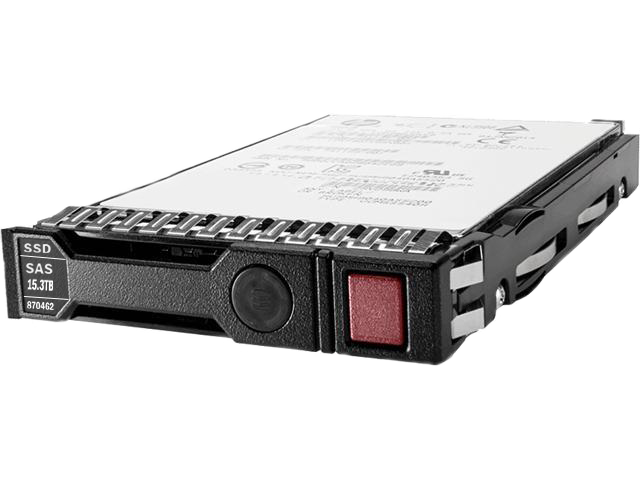
Massive Reads, Minimal Latency: HPE’s 15.3TB SAS SSD Powering Enterprise Performance
Dense Read Power: The HPE 15.3TB 2.5 inch SAS-12Gbps Smart Carrier Read Intensive SSD for ProLiant Gen9 and Gen10 Servers
Executive summary
The HPE 15.3TB 2.5 inch SAS 12Gbps Read Intensive Solid State Drive with Digitally Signed Firmware and Smart Carrier technology is a high density enterprise storage solution built for large scale, read heavy workloads. Designed specifically for HPE ProLiant Gen9 and Gen10 servers, this SSD offers exceptional capacity, strong read performance, enterprise grade reliability, and seamless integration with HPE’s storage controllers and management tools. It delivers the space needed for massive datasets while maintaining the speed and resilience essential in modern data centers.
What this drive is and why it matters
Product positioning and target workloads
This 15.3TB SAS Read Intensive SSD is engineered for scenarios where read operations far exceed write activity. It is ideal for virtualization environments, content repositories, search engines, large catalog systems, analytics workloads, media servers, and read optimized databases. Its large capacity allows organizations to consolidate storage, reduce footprint, and serve large datasets with consistently low latency. As a Read Intensive model, it balances performance and cost by prioritizing read speed over high endurance.
Physical and electrical characteristics
Form factor, interface, and carrier
The drive uses a 2.5 inch Small Form Factor and connects through a SAS 12Gbps interface, ensuring high throughput and robust enterprise reliability. It arrives preinstalled in an HPE Smart Carrier tray, providing full compatibility with hot swap drive bays in ProLiant servers. The Smart Carrier includes intuitive health and activity LEDs, latch mechanisms, and identification features designed for server administrators.
Digitally signed firmware
HPE supplies this drive with digitally signed firmware, ensuring it is fully validated for ProLiant ecosystem requirements. Digitally signed firmware improves update safety, enhances drive authentication, and ensures seamless alignment with Smart Array controllers and HPE server management utilities. Using certified firmware reduces the risk of incompatibilities and maintains stable long term operation.
Performance profile
Read throughput and IOPS
This drive focuses on outstanding read performance. High sequential read speeds and strong random read IOPS make it well suited for multi tenant virtualization, content delivery, and large scale data access patterns. With SAS 12Gbps bandwidth, it can sustain high throughput in demanding environments and scale effectively in RAID configurations or storage arrays.
Write performance and endurance
Although optimized for reads, the drive still handles regular operational writes efficiently. However, its endurance rating is lower than Mixed Use or Write Intensive SSDs, so it is not recommended for constant write heavy workloads such as high velocity transactional databases or heavy logging servers. For read dominant environments, the endurance profile is more than adequate and helps maintain an excellent cost per terabyte value.
Compatibility and integration with ProLiant Gen9 and Gen10
Supported platforms and controller integration
The HPE 15.3TB Read Intensive SSD is fully compatible with a wide range of ProLiant Gen9 and Gen10 servers. It integrates smoothly with Smart Array controllers, SAS expanders, and HPE's embedded storage subsystems. The drive is engineered to meet HPE thermal, electrical, and firmware standards, ensuring predictable behavior and stable operation.
Firmware and management alignment
For best results, administrators should keep server ROMs and Smart Array controller firmware updated. HPE's Smart Update Manager and Service Pack for ProLiant make it easy to maintain a consistent firmware environment. This helps ensure correct drive identification, reliable performance, and accurate health diagnostics.
Deployment patterns and architecture choices
RAID and redundancy recommendations
Due to its extremely high capacity, thoughtful RAID selection is important. RAID 1 or RAID 10 is recommended for performance focused deployments where resilience and rebuild speed matter. RAID 6 may be appropriate for large storage pools where higher usable capacity is needed, though rebuild times can be lengthy. Choosing a RAID level that minimizes write amplification improves both performance and drive longevity.
Use in tiered storage environments
This drive shines as part of a tiered storage architecture. Its massive capacity and fast reads make it ideal for warm or hot tiers in enterprise data environments. Pairing it with cost efficient HDDs for archival data creates a balanced storage hierarchy. Software defined storage platforms and HPE storage solutions can automate data placement between tiers.
Operational considerations
Monitoring, telemetry, and health management
Enterprise SSDs provide rich health metrics including wear indicators, remaining life counters, error statistics, and spare block tracking. Integrating these values into monitoring stacks enables proactive maintenance. HPE’s management tools consolidate drive health data, making it easier to anticipate failures and schedule replacements before downtime occurs.
Firmware update strategy
Maintaining firmware alignment across servers and storage controllers is essential. Using HPE approved update bundles ensures that drive firmware remains compatible with system ROMs and Smart Array software. Administrators should test updates in staging environments before deploying to production systems, especially in large fleets.
Cost, warranty, and procurement notes
Cost efficiency and total cost of ownership
Although high capacity enterprise SSDs involve a higher initial investment than spinning storage, they significantly reduce rack space, power consumption, cooling requirements, and latency. Over time, these benefits lower operational costs and improve application performance. For organizations that rely heavily on read centric workloads, the total cost of ownership is often better than traditional disk arrays.
Warranty and service
HPE typically offers enterprise grade warranty coverage on these drives. Buying through HPE or authorized resellers ensures eligibility for warranty replacement, firmware support, and lifecycle management. Tracking part numbers and firmware versions helps maintain compliance and simplifies service interactions.
Security and data protection
Data at rest protection
Many enterprise SAS SSDs support encryption features and secure erase mechanisms. When paired with compatible Smart Array controllers, they can integrate into organization wide encryption policies and key management systems. This helps protect sensitive workloads and ensures compliance with data security standards.
Secure decommissioning
When the drive reaches end of life, secure erase procedures or physical destruction (for high security environments) should be followed. Proper documentation of drive lifecycle supports audits, compliance reviews, and responsible asset management.
Conclusion
The HPE 15.3TB 2.5 inch SAS 12Gbps Read Intensive SSD is a powerful and exceptionally dense storage solution tailored for ProLiant Gen9 and Gen10 servers. With its impressive capacity, strong read performance, digitally signed firmware, and Smart Carrier design, it provides a dependable foundation for large scale, read heavy workloads. When deployed with the right RAID strategy, firmware alignment, and monitoring processes, this drive delivers outstanding efficiency, stability, and performance for enterprise environments seeking both scale and reliability.
Recent Posts
-
Unlock Blazing NVMe Speed: HPE P22276-B21 1.92TB U.3 PCIe x4 High Performance SSD for ProLiant Gen8 Gen9 Gen10 Servers
HPE P22276-B21 1.92TB NVMe U.3 Read Intensive SSD for ProLiant Gen8 Gen9 Gen10 Servers The HPE P2227 …Mar 5th 2026 -
Lightning Speed Enterprise Storage: HPE P07192-B21 1.92TB NVMe U.2 PCIe x4 Read Intensive SSD for ProLiant Gen8 - Gen10 Servers
Power Up Enterprise Storage with the HPE P07192-B21 1.92TB NVMe U.2 Read Intensive SSD High Performa …Mar 4th 2026 -
Unleash NVMe Power: HPE P20139-B21 1.92TB U.3 PCIe x4 Read Intensive SSD for ProLiant Gen8 Gen9 Gen10 Servers
HPE P20139-B21 1.92TB NVMe U.3 Read Intensive SSD for ProLiant Gen8 Gen9 Gen10 Servers The HPE P2013 …Mar 3rd 2026